
When an employee drives for work, the vehicle becomes part of the workplace. A service technician heading to the next call, a crew member moving a pickup between sites, a delivery driver working through a full route, and a supervisor driving to a customer meeting are all making safety decisions at highway speed, usually alone and often under time pressure.
Defensive driving training for employees gives those drivers a planned time to practice the habits that prevent crashes: watching far enough ahead, keeping space, managing distraction, and knowing what to do when something goes wrong. This guide explains what a useful program should cover, who should attend, and how simulator practice helps drivers rehearse serious situations without putting anyone at risk. It is general information, not legal advice.
Why driving belongs in your safety program
Driving is easy to overlook because it feels ordinary. Yet the Bureau of Labor Statistics Census of Fatal Occupational Injuries lists transportation incidents as the most frequent type of fatal work event, accounting for 38.2 percent of occupational fatalities in 2024. Roadway incidents involving motor vehicles made up 1,146 of those deaths. NIOSH describes motor vehicle crashes as the leading cause of work-related deaths in the United States.
Those numbers are not only about professional truck drivers. Many crashes involve people whose main job is something else, such as installing equipment, inspecting a site, selling, or supervising a crew, and who drive to get that work done. Their training often focuses on the task at the destination, not on the miles in between.
For most employees driving on public roads, there is no single federal rule that spells out a defensive driving course. OSHA’s motor vehicle safety resources still encourage employers to set clear driving policies and train the people who drive for work, and customers, insurers, and company policy often expect it. A written program with real practice behind it is the most practical way to show the expectation is taken seriously.
What defensive driving training should cover
A good course is built around the decisions that come before a crash, not a list of rules to memorize. The topics below form the core of most strong programs, and they match the skills Training Wheelz USA practices in its 4 Hour D.E.F.E.N.S.E. Course:
- Distraction. Phones, navigation, dispatch messages, and paperwork in the cab, plus a simple routine for handling them before the vehicle moves.
- Following distance and space. Keeping room ahead and to the sides, and leaving an escape path in traffic.
- Scanning and decision making. Looking far enough ahead to see a hazard early, then choosing a response instead of reacting at the last second.
- Loss-of-control recovery. What to do in a skid, a tire blowout, or when a wheel drops off the edge of the pavement.
- Conditions and fatigue. Rain, low visibility, night driving, long shifts, and rollover risk in taller or loaded vehicles.
The best programs also connect these topics to the company’s own vehicles and routes. A crew that tows trailers, drives lifted pickups, or works on rural two-lane roads faces different situations from a team driving sedans around the city. The training should reflect that.
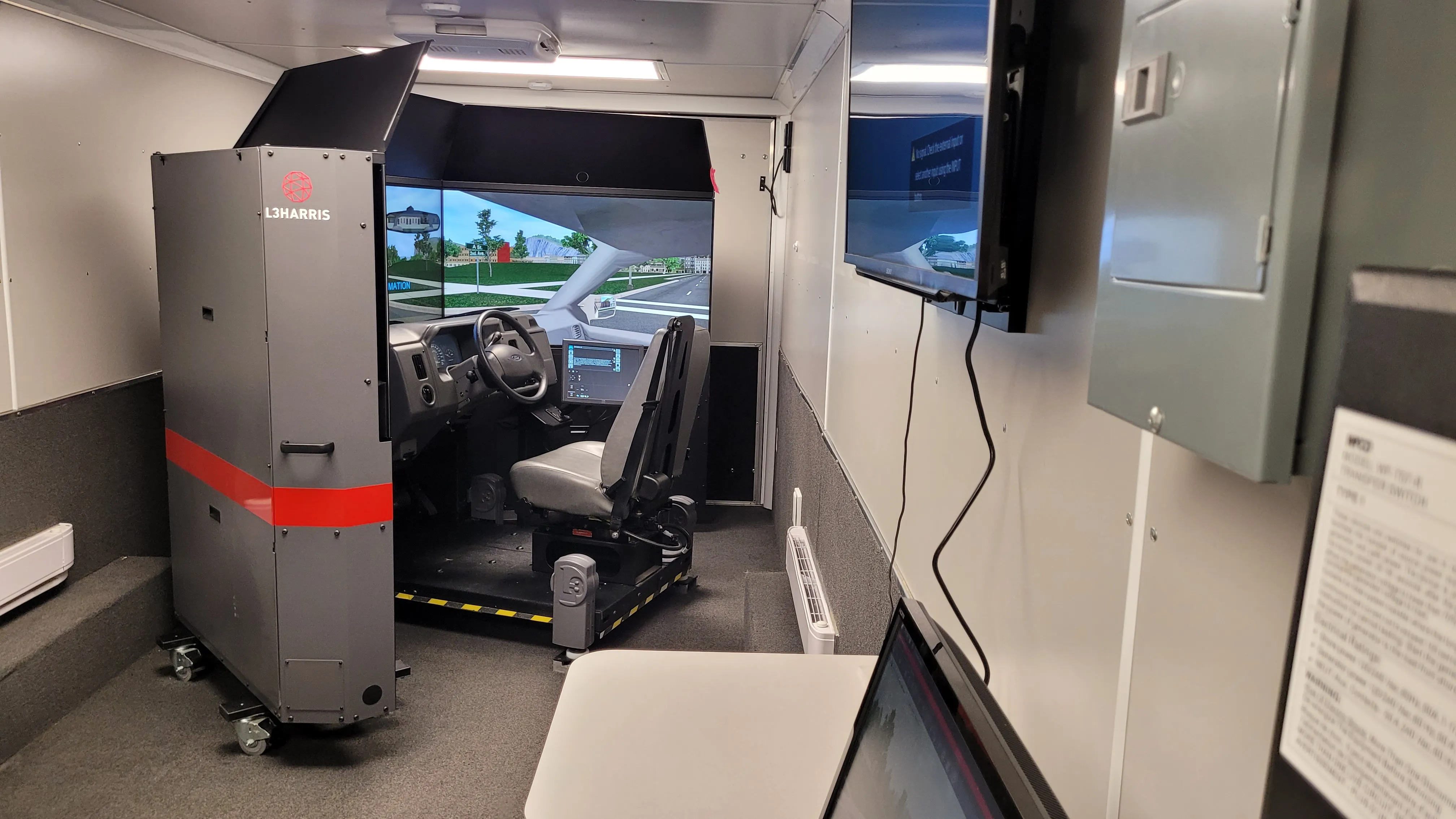
Why simulator practice makes the lesson stick
Most drivers have heard the advice to keep a safe following distance or to steer gently in a skid. Far fewer have practiced it at the moment it counts. On a real road, a blowout or a wheel dropping off the pavement happens without warning, and nobody can safely set one up for practice.
A driving simulator closes that gap. An instructor can put a driver into a dangerous situation, let them respond, talk through what happened, and run the same scenario again. Drivers see the result of following too closely or glancing at a phone without anyone getting hurt, and they build the right response through repetition rather than reading about it.
Simulator time is not a replacement for real driving experience or for any license-specific training a job requires. It is a safe place to rehearse the rare, high-stakes moments that everyday driving rarely prepares people for.
Who should attend
Start with anyone who drives on company time, whether in a company vehicle or their own. That often includes:
- Service technicians, installers, and field crews in pickups or vans
- Delivery and route drivers
- Sales staff and supervisors who drive between locations
- New hires, before they are assigned a vehicle
- Drivers who have had a recent crash, near miss, or complaint
- Younger employees with less time behind the wheel
Commercial drivers have their own federal licensing and training requirements. Defensive driving training can strengthen their habits, but it does not replace CDL training. For people starting that path, see what new truck drivers should expect from training.
Plan a training day that fits the work
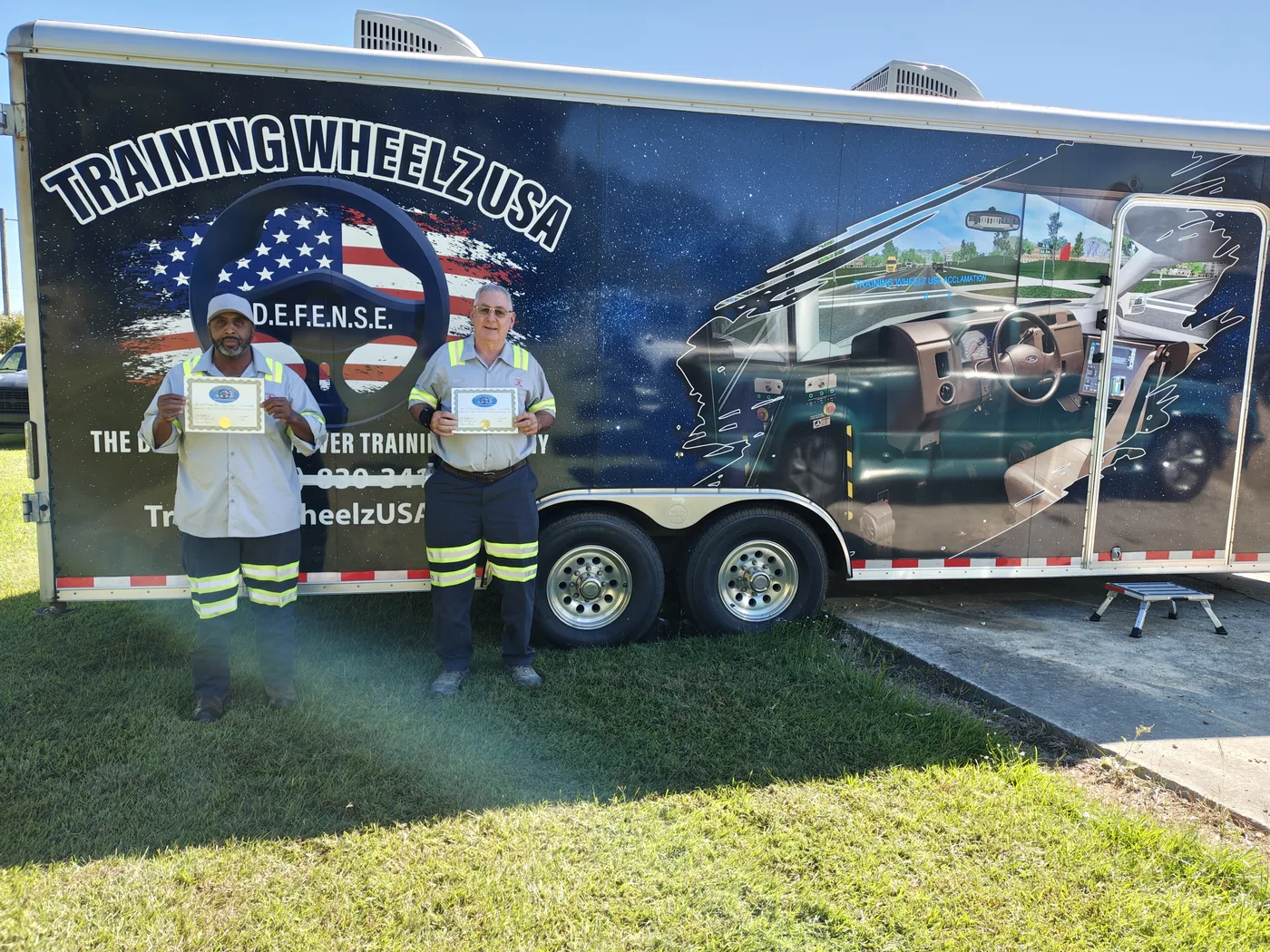
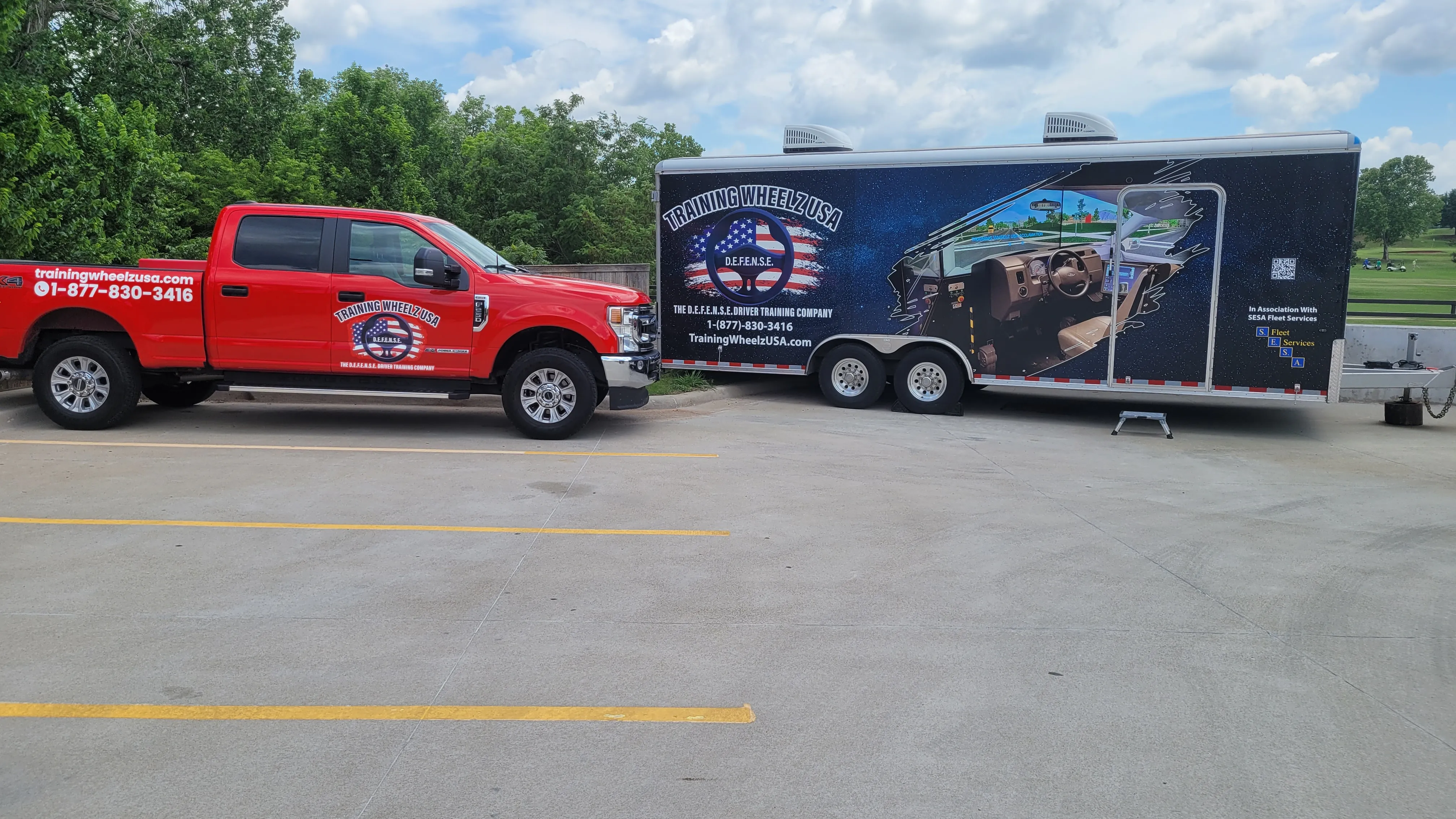
Training often gets postponed because pulling drivers off the road costs money. Bringing the training to the worksite reduces that cost. Training Wheelz USA brings its mobile simulator trailer to your location, so drivers can rotate through the course in groups while the rest of the operation keeps moving.
Before the date, gather a few details: how many drivers will attend, what vehicles they drive, the kinds of roads and loads they handle, and any recent incidents or concerns. That information shapes the conversation and helps the instructor focus on the situations your drivers actually face.
Pair the training with the policies that support it. A clear phone-use rule, seat belt expectations, pre-trip vehicle checks, and a simple way to report near misses give drivers something concrete to follow after the course ends.
Keep the training going after the course
A single course is a strong start, not the finish line. Watch what happens afterward: crashes and near misses, vehicle damage, customer complaints about driving, and what supervisors notice on ride-alongs. Those patterns show where a driver or a team needs more attention.
Many organizations repeat defensive driving training on a regular schedule, add it to new-hire onboarding, and schedule extra time after an incident or a change in vehicles or routes. Training records with dates, attendees, and topics make it easy to show customers and insurers what your team has completed.
Training Wheelz USA offers instructor-led, simulator-based driver safety courses for employers, fleets, schools, and organizations, along with OSHA 10-hour and forklift operator training for workplace safety programs. To talk through your drivers and timing, request a training date.
Bring practical safety training to your site.
Training Wheelz USA delivers instructor-led driver and workplace safety training for organizations across The Woodlands and surrounding areas.
Request a Training Date →Frequently asked questions
Is defensive driving training required for employees?
For most employees who drive on public roads, there is no single federal rule requiring a defensive driving course. Commercial motor vehicle drivers have separate federal requirements, and customers, insurers, and company policy often set their own training expectations.
How long is a defensive driving course for employees?
It depends on the program. Training Wheelz USA lists its D.E.F.E.N.S.E. course at 4 hours 45 minutes and its S.M.A.R.T./S.T.A.R.T. course at 2 hours. Call for a quote based on your group size and location.
Is this the same as a Texas defensive driving course for a ticket?
No. Courses taken to dismiss a traffic ticket follow separate state approval rules. Employee defensive driving training is about building safer habits for work driving. If you need a course for a ticket, confirm the provider is approved for that purpose.
Can the training come to our location?
Yes. Training Wheelz USA brings its mobile simulator trailer to schools, yards, and customer locations, so drivers can train without traveling off site.
Related posts
Truck Driver Training: What New Drivers Should Expect
A practical guide to truck driver training, CDL preparation, and building safer habits before the road gets demanding.

Does OSHA 10 Expire? What Employers Need to Know
Does an OSHA 10 card expire? Learn what the federal program says, when a workplace may still require updated training, and how to plan responsibly.
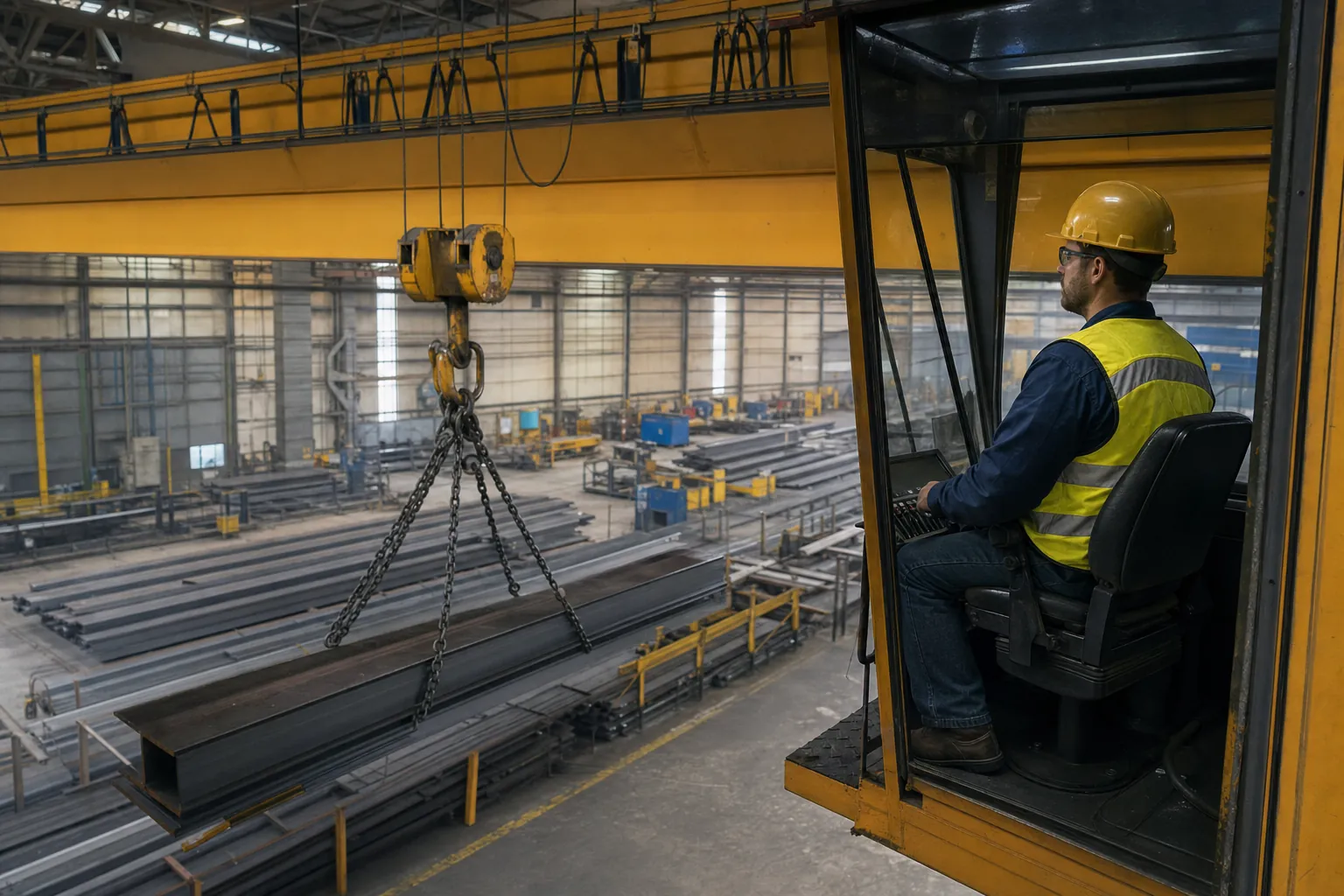
Forklift Operator Certified Training: What It Requires
What forklift operator certified training includes, how workplace evaluation works, and when refresher training is needed.