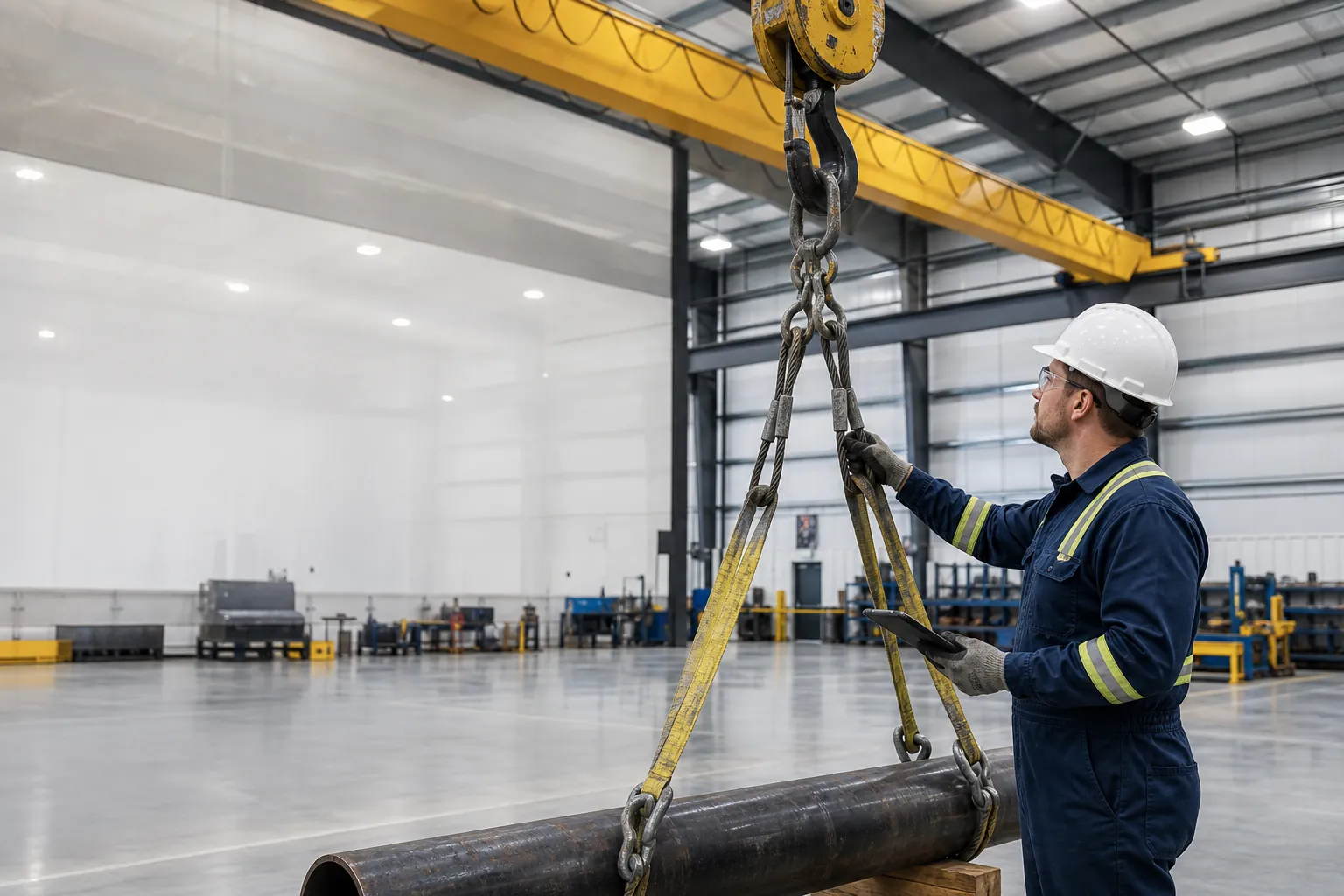
Overhead crane operator training should do more than put someone through a presentation and hand them a card. The operator needs to understand the specific crane, hoist, controls, loads, travel path, and people involved in the work. They also need a chance to show they can make calm, controlled decisions before a lift becomes time-sensitive.
That is why a useful training plan combines general operating principles with the conditions at the actual site. This guide explains the topics that belong in overhead crane operator training, the planning conversations that protect a lift, and the practical follow-through that helps a training day hold up when production gets busy.
Start with the crane, the load, and the work area
An overhead crane is not one generic piece of equipment. A top-running bridge crane, underhung crane, monorail, hoist, pendant-controlled unit, and radio-controlled system can place different demands on the person operating it. Before training begins, identify the equipment the group actually uses, its rated capacity, the controls available, the normal loads moved, and the areas where those loads travel.
The work around the crane matters just as much as the crane itself. A maintenance lift in an open bay does not present the same decisions as moving material through a production line, a tight shop, a loading area, or an aisle shared with other teams. Operators need to know where pedestrians may appear, which travel routes are approved, what clearances can change, and when an unfamiliar lift needs to stop for a better plan.
For general-industry overhead and gantry cranes, OSHA's 1910.179 standard is an important starting point. It covers equipment and operating expectations, including the need to avoid carrying loads over people. The details that apply can depend on the equipment and the work, so employers should match their program to the applicable rules and the manufacturer's instructions rather than treating one checklist as universal.
Separate general industry work from construction crane rules
The phrase "crane certification" can create confusion because different equipment and work settings can fall under different requirements. An overhead crane operating inside a plant or shop is not automatically governed by the same framework as a mobile crane working on a construction site. Construction work has separate federal crane operator qualification and certification rules, while general-industry overhead crane work commonly centers on the equipment, workplace procedures, and the operator's demonstrated ability to perform the assigned work safely.
That distinction is practical, not academic. Before scheduling a course, clarify the type of crane, where it will operate, whether the work is maintenance, manufacturing, construction, or a mixture, and whether a customer or local authority has an added rule. A training provider can then build the right conversation around the real work instead of promising that one credential settles every question.
For teams comparing training options, start with the existing overhead crane and rigger training page. It explains Training Wheelz USA's on-site format, while the Training page helps organizations see the broader mix of workplace courses available for their people.
Teach the operating habits that prevent routine lifts from drifting
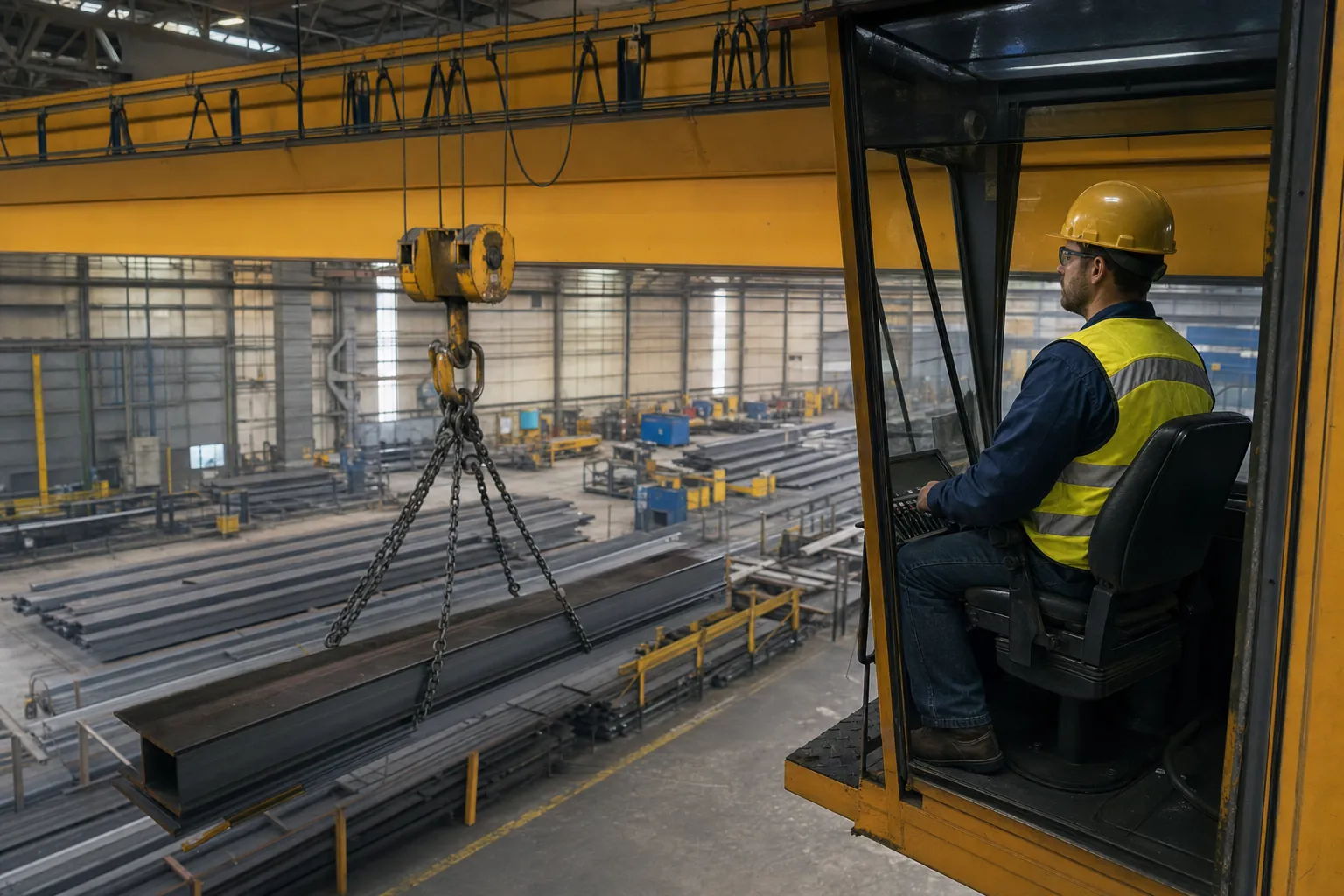
Strong operator training covers the basic sequence before a load moves: inspect the area, confirm the lift is understood, make sure the path is clear, test controls when appropriate, and move deliberately. Operators need to recognize rated capacity, understand the purpose of warning devices and limit switches, use the correct control motions, and know when equipment should be removed from service instead of used for one more lift.
The travel itself deserves specific attention. A load should be handled in a way that protects people and keeps the operator from reacting late to sway, changing visibility, or an obstacle in the path. The operator needs to understand why sudden starts and stops, side loading, distracted control use, and passing a load over people create unnecessary risk. A short, clear explanation is useful, but supervised practice turns those principles into habits.
This is also the right place to define authority. Operators should know they can stop when a signal is unclear, a load does not look right, a person enters the travel path, a control does not respond as expected, or the task changes. A culture that treats a pause as a responsible decision is safer than one that treats every delay as an operator problem.
Make lift planning and rigging coordination part of the course
The operator is only one part of a safe lift. The load may be prepared by a rigger, directed by a signal person, and moved through an area where several employees are working. Training should make those handoffs clear: who selects and inspects the rigging, who gives signals, who controls the exclusion area, and who has the authority to stop the lift when something changes.
A lift plan does not have to be a giant document for every routine move, but people should know the questions to ask before work starts. What does the load weigh? Is the center of gravity understood? Are the sling angles, hitch, hooks, and attachment points suitable? Is there enough clearance? Is the route clear? Does the move require a spotter, barricade, or a more detailed plan because it is unusual or high consequence?
Training Wheelz USA's overhead crane and rigger training is designed for the teams involved in lifting work, not just the person at the pendant. That makes it easier for operators, riggers, and supervisors to use the same language when the job calls for a pause, a better signal plan, or a different approach.
Use the worksite to teach the conditions people actually face
A classroom can explain a safe operating principle. The worksite shows where that principle can get tested. Floor markings may be worn, a process may move into the crane bay, a new rack may reduce clearance, a maintenance crew may need access, or a shift change may put unfamiliar people near the travel path. Those are the details that make site-specific training valuable.
Walk through normal lift routes with the group. Identify areas where visibility changes, locations where employees cross the path, places where a load can swing near equipment, and any parts of the operation that create pressure to hurry. Discuss what an operator should do if a pedestrian enters the area, a load starts to behave unexpectedly, communication breaks down, or the equipment does not sound or feel right.
Employers that also use powered industrial trucks should keep the responsibilities separate. Forklift operator training covers a different equipment category and work pattern. The same broad habit applies to both: instruction should fit the equipment, task, and environment instead of treating every moving load as the same job.
Evaluate performance, not just attendance
An attendance sheet proves only that a person was in the room. A useful evaluation gives the operator a fair chance to show that they can inspect the setup, recognize capacity and clearance limits, operate controls smoothly, follow the planned path, communicate appropriately, and stop when a condition is not right.
The evaluation should be tied to the work the operator is assigned. Someone who normally moves simple, predictable loads in one bay may need additional instruction before using different controls, handling a more complex load, working in another area, or taking part in an unusual lift. Supervisors should record what was covered, who evaluated the operator, which equipment and conditions were involved, and any follow-up that was needed.
Records matter because they make the training plan visible. They help a supervisor see who has been prepared for what work, make a later review more useful, and reduce the chance that a new assignment is made on assumption alone. They are not a substitute for judgment, but they give the team a clearer starting point when roles or conditions change.
Refresh training when the work changes
A refresher is most useful when it responds to a real reason. That might be a new crane or hoist, a different control system, a changed travel path, new lifting attachments, a near miss, damaged equipment, a recurring communication problem, an incident, or an operator who has not performed the work for a long period. Waiting for a date on a card can miss the changes that create risk first.
Use the review to look beyond the individual operator. A recurring problem may point to an obstructed aisle, poor lighting, unclear signals, worn equipment, inconsistent rules between shifts, or pressure to move loads before the area is ready. Training can improve skill, but it cannot make an unsafe route or broken process safe by itself.
Organizations building a wider workplace plan can combine this conversation with OSHA 10-hour General Industry training or OSHA 30-hour General Industry training for leaders and teams who need a broader foundation in hazard recognition. The right mix depends on the work, equipment, and responsibilities at the site.
How Training Wheelz USA can help
Training Wheelz USA provides on-site overhead crane and rigger training for teams whose work depends on lifting equipment and clear coordination. The full-day and three-day options let organizations bring the training conversation close to the crane, rigging, work routes, and people involved in the actual job.
Before the course, the team can discuss the equipment in use, the kind of lifts employees handle, who should attend, and the timing that gives the group room to focus. That preparation helps the course feel connected to the work the team returns to after training.
To plan a course for your team, request a training date.
Bring practical safety training to your site.
Training Wheelz USA delivers instructor-led driver and workplace safety training for organizations across The Woodlands and surrounding areas.
Request a Training Date →Frequently asked questions
What should overhead crane operator training include?
A useful program covers the specific crane and controls, rated capacity, pre-use checks, safe load travel, clearances, communication, lift planning, rigging coordination, worksite hazards, and a practical evaluation tied to the operator's assigned work.
Is overhead crane operator training the same as construction crane certification?
Not necessarily. Construction crane work has separate federal operator qualification and certification rules. General-industry overhead crane work should be matched to the equipment, workplace, applicable rules, manufacturer instructions, and the operator's demonstrated ability to perform the assigned work safely.
Who should attend overhead crane training?
The group may include crane operators, riggers, signal people, supervisors, and others who plan or work near lifting operations. The right attendance list depends on who handles the equipment, prepares loads, gives direction, and controls the work area.
When should overhead crane training be refreshed?
Review training when equipment, controls, loads, routes, personnel, or site conditions change, or after a near miss, incident, extended gap in operating, or observed performance concern. The review should address both skill needs and workplace conditions that may be contributing to the issue.
Related posts
Truck Driver Training: What New Drivers Should Expect
A practical guide to truck driver training, CDL preparation, and building safer habits before the road gets demanding.
Forklift Operator Certified Training: What It Requires
What forklift operator certified training includes, how workplace evaluation works, and when refresher training is needed.

Does OSHA 10 Expire? What Employers Need to Know
Does an OSHA 10 card expire? Learn what the federal program says, when a workplace may still require updated training, and how to plan responsibly.